

Deck & Fence Cleaning in Lexington, KY
Low-pressure, wood-safe cleaning that lifts mold, mildew, and gray weathering from wood, composite, vinyl, and chain-link — without raising the grain or damaging the finish underneath.
Wood-safe PSI, every time
No raised grain, no splintering
Amateur pressure damages wood
One wrong pass is permanent
Quoted before we start
An estimate you can trust
Why Wood Needs a Gentler Hand
High pressure doesn't just clean wood — it can swell and roughen the fibers permanently. That's called raised grain, and it can't be fully sanded back out.
A deck or fence takes more day-to-day abuse than almost any other surface on a property — foot traffic, pets, pool splash, direct sun, and standing moisture between boards, all at once. It's also one of the easiest surfaces to genuinely damage with the wrong cleaning approach. Concrete and siding can handle a mistake in pressure or method with minor consequences. Wood usually can't — which is exactly why this is the job where hiring an inexperienced crew shows up as permanent texture damage, not just a mediocre clean.
Every Material Is Different
Deck and fence materials we clean.
Pressure-Treated Wood Decking
The most common deck material in Lexington — needs low pressure to avoid raising the grain and roughening the surface permanently.
Cedar Decking
Naturally rot-resistant but softer than treated pine, so it needs an even gentler touch to avoid splintering aged boards.
Composite Decking (Trex-style)
Cleaned at lower pressure than wood — the cap layer that gives composite its finish can be damaged by aggressive pressure washing.
Wood Privacy Fencing
Shaded fence lines hold moisture longest and are the most common spot for thick moss and mildew buildup.
Vinyl Fencing
More pressure-tolerant than wood, but still soft washed to avoid visible pressure lines on the panel surface.
Chain-Link Fencing
Rust at joints and connectors gets targeted separately from the general algae and grime on the links themselves.
Can you clean composite decking like Trex?
Yes, at an even lower pressure than wood. Composite decking has a cap layer that some manufacturers warn can be damaged by high pressure, so we treat it more like siding than like a wood deck.
Why the wrong pressure ruins wood permanently.
Wood is made of long fibers running the length of each board. High pressure aimed directly at that surface doesn't just remove dirt — it forces water into the wood itself, swelling and separating those fibers. The result is called raised grain: a rough, fuzzy texture where the board used to be smooth. Once it happens, sanding can improve it, but the board never quite goes back to its original surface.
That's the real risk behind hiring inexperienced help for this job — an amateur with a rented pressure washer can leave a deck looking clean for a week and permanently textured for years. We wash wood at a pressure low enough that the cleaning solution does the work, not the force of the water.
Will pressure washing damage my deck boards?
Only at the wrong pressure. Too much force raises the wood grain — swelling and roughening the fibers permanently, which no amount of sanding fully fixes. We wash wood at low pressure specifically to avoid that.
What Actually Shows Up
Wear patterns on Lexington decks and fences.
Dog Claw & Pet Wear
Repeated scratching and pacing in the same deck sections wears through the surface finish faster than foot traffic alone.
Pool Splash Zone Staining
Chlorine exposure and sunscreen residue near a pool deck's edge leave a different stain pattern than general weathering.
Moss on Shaded Fence Lines
North-facing or tree-covered fence sections stay damp longest and grow moss even where the rest of the yard looks clean.
Mildew in Board Gaps
The narrow gaps between deck boards trap moisture and organic debris longer than the open board surface.
Rust at Metal Fasteners
Screws, hinges, and gate hardware bleed rust streaks onto surrounding wood or vinyl over time.
Gray Weathering
UV exposure breaks down wood's natural color over years, leaving the silvery-gray look most homeowners mistake for dirt.
How do you deal with moss on a shaded fence line?
Moss needs to be treated with a cleaning solution first and given time to dwell before rinsing — trying to blast it off with straight pressure just spreads spores rather than removing them.
Worth Clarifying
Cleaning your deck and staining it are two different jobs.
A lot of homeowners assume a deck cleaning includes restaining, or that it's a step toward it. It's worth being clear upfront: our wash removes mold, mildew, gray weathering, and general grime, restoring the wood's appearance without altering its finish. Full restaining is a different project — it typically requires stripping any existing failed stain, sanding, and applying new product, which is a separate scope of work.
If you're planning to stain or reseal after cleaning, mention it when you call — we can either coordinate that as an add-on or point you toward the right process so the timing works.
Do you seal or stain the deck after cleaning?
Cleaning and staining are two different projects. We clean off mold, mildew, and gray weathering — if you want a full strip-and-stain job afterward, that's a separate service we can coordinate or recommend.
Honest Expectations
A few things worth knowing before you book.
We won't strip failing stain during a standard clean.
If your deck has peeling or failing stain you want fully removed before restaining, that's a separate stripping process — let us know so we can scope it correctly rather than surprise you later.
Very old, soft, or already-damaged boards need extra care.
Weathered wood that's already softened or splitting can react differently even to low pressure. We'll flag anything that looks fragile before we start rather than risk it.
Deep pet stains and rust may lighten rather than fully vanish.
Years of pet staining soaked into wood grain, or rust that's bled deep into the surface, usually improves significantly but doesn't always disappear completely.
Composite decking gets treated more conservatively.
Because some composite manufacturers specify pressure limits to protect the warranty, we intentionally clean it more gently than we would a standard wood deck.
Real Results
Recent deck and fence cleanings around Lexington.
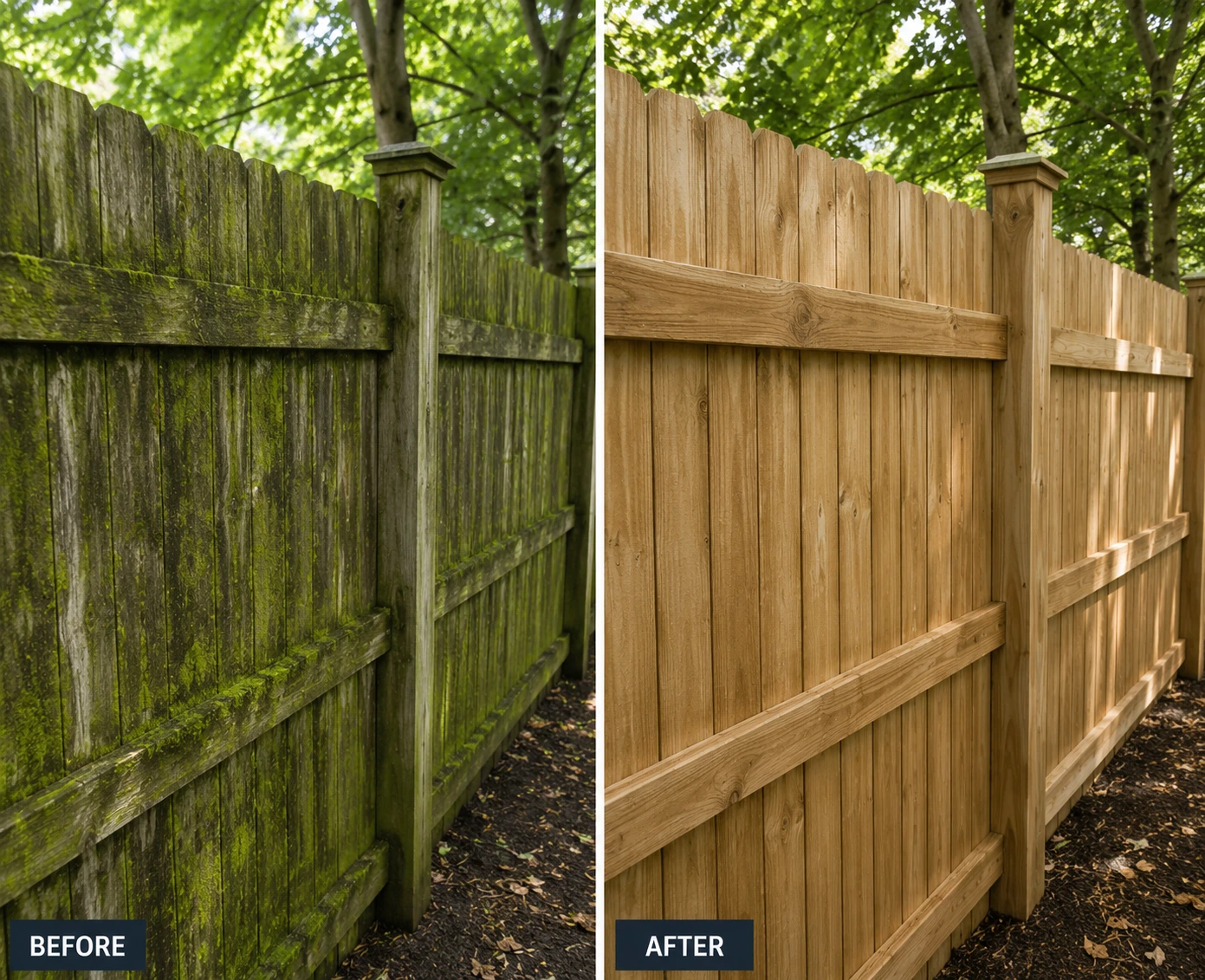
Privacy Fence Moss Removal
Thick moss on a shaded privacy fence treated and rinsed clean without a replacement needed.
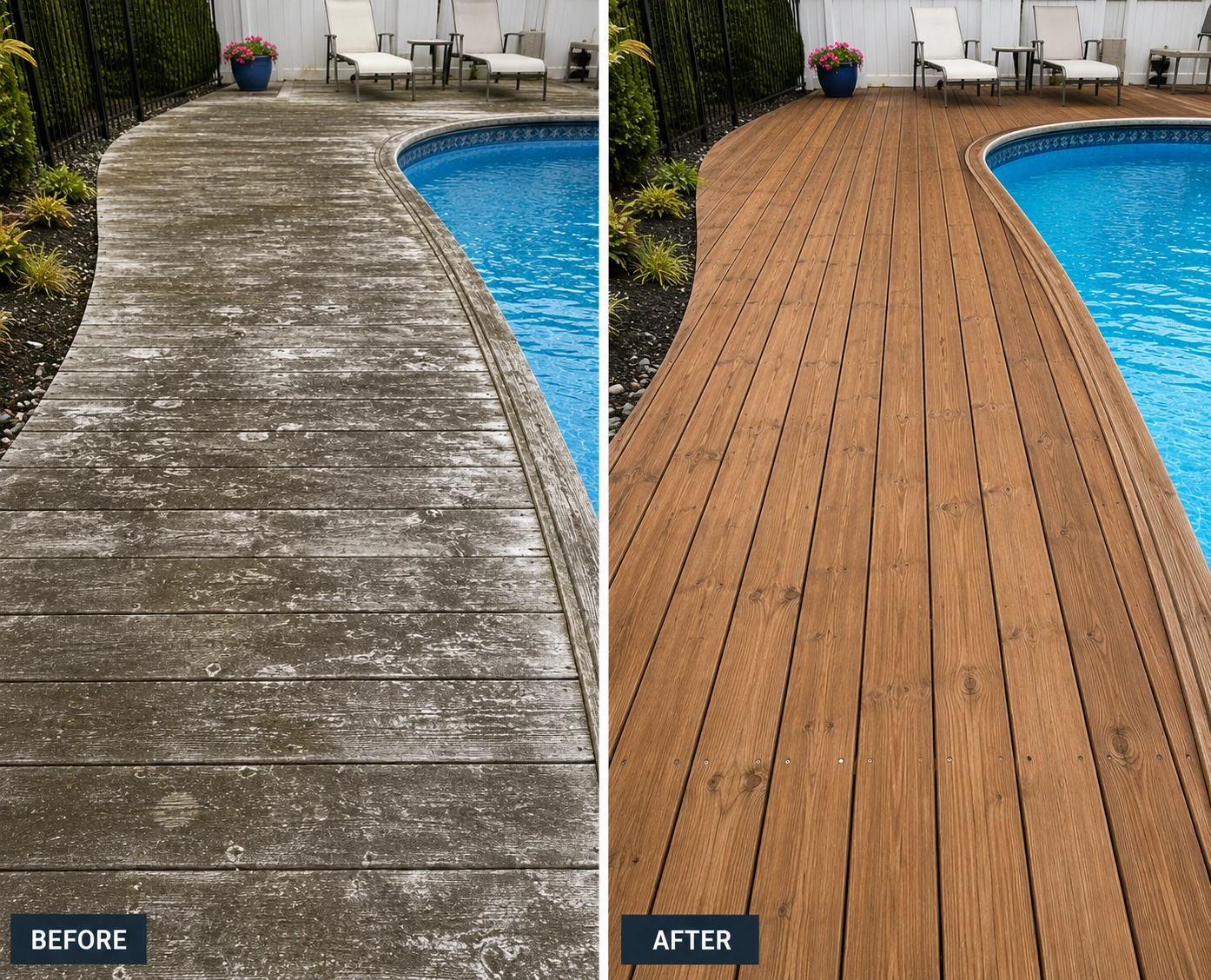
Pool Deck Refresh
Chlorine and sunscreen staining lifted from a wood deck surrounding an in-ground pool.
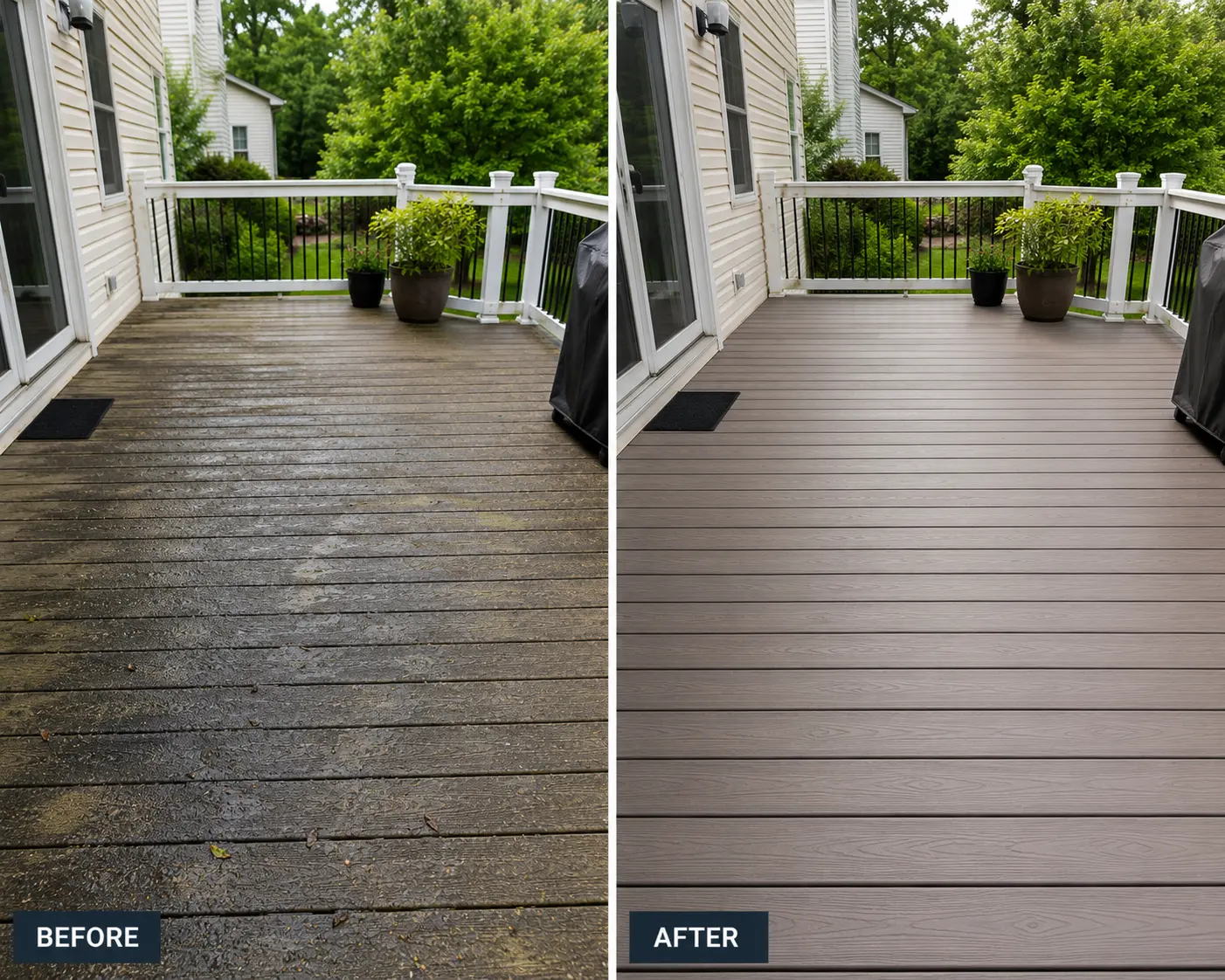
Composite Deck Wash
Full composite deck cleaned at reduced pressure to protect the manufacturer's cap-layer finish.
Estimated Pricing
What deck and fence cleaning typically runs.
Priced by square footage for decks and linear footage for fencing — these are estimate ranges, not fixed quotes. Heavy moss, pet staining, or multiple materials on one property get a specific number on-site.
Standard wood deck
Est. $299–$550
Composite deck
Est. $349–$600
Wood privacy fence
Est. per linear ft
Vinyl fencing
Est. per linear ft
Heavy moss/mildew add-on
Est. add'l treatment
Bundle with house wash
Best estimated value
Every Deck & Fence Cleaning Includes
Save More
Bundle deck and fence cleaning and save 10–15%.
House Washing
Soft wash siding cleaning — a common pairing since we're already set up with wood-safe equipment.
Learn more Add-On ServiceConcrete & Driveway Cleaning
Hot-water pressure washing for driveways, patios, and pool decks.
Learn more Add-On ServiceGutter Cleaning
Interior clean-out and exterior brightening while we're already on-site.
Learn moreQuestions
Common questions about deck and fence cleaning.
Will pressure washing damage my deck boards?+
Only at the wrong pressure. Too much force raises the wood grain — swelling and roughening the fibers permanently, in a way that no amount of sanding fully fixes. We wash wood at low pressure specifically to avoid that outcome.
Do you seal or stain the deck after cleaning?+
Cleaning and staining are two separate projects. We clean off mold, mildew, and gray weathering — if you want a full strip-and-stain job afterward, that's a bigger service we can coordinate or point you toward.
Can you clean composite decking like Trex?+
Yes, at an even lower pressure than wood. Composite decking has a cap layer that some manufacturers specifically warn can be damaged by high pressure, so we treat it more like siding than a wood deck.
How do you deal with moss on a shaded fence line?+
Moss needs a cleaning solution applied first and given time to dwell before rinsing. Blasting it with straight pressure just spreads the spores around instead of actually removing them.
Can you remove pet stains or rust marks from a deck?+
We can significantly lighten most pet staining and surface rust from hardware. Deeply set stains that have soaked into the wood grain over several years don't always fully disappear, though they usually improve a great deal.
How often should a deck or fence be cleaned?+
Once a year is standard for most Lexington properties. Decks with heavy shade, a pool nearby, or pets that spend a lot of time outside often benefit from cleaning every season.
Will cleaning strip old peeling stain off my deck?+
Not reliably — that's a different process (stripping) from cleaning. If your deck has failing stain you want fully removed before restaining, let us know so we can scope that separately.
Do I need to move furniture or grills off the deck first?+
It helps, but isn't required — we can work around most furniture. Anything you can move beforehand just means a more thorough clean underneath it.
Don't let an amateur ruin your deck.
Wood-safe pressure, every material, quoted before we ever pick up a hose.
100% Satisfaction Guarantee
Not happy? We come back and fix it. No questions.